
Boca Raton Flood Zones Explained: What to Check Before You Offer
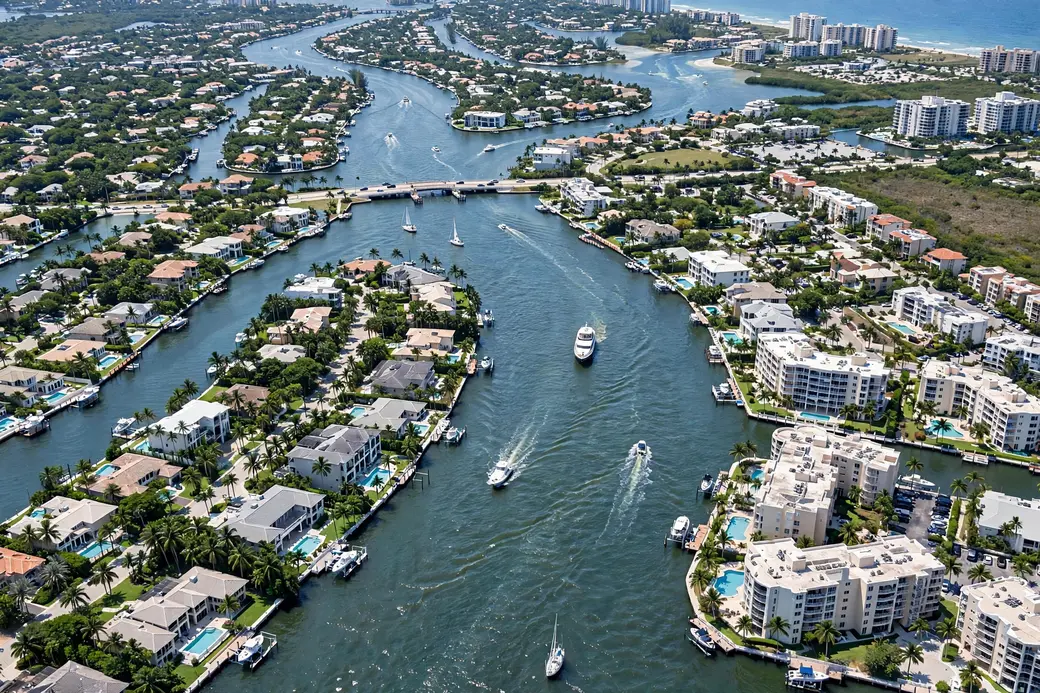
Understanding Boca Raton flood zones isn't about fear — it's about knowing what you're buying, what insurance will cost, and what to ask before you offer.
What Flood Zones Actually Tell You (and What They Don't)
FEMA draws flood maps that classify every property by flood risk. You'll see letter labels: Zone X (and shaded X) generally means lower risk; Zones AE and VE are higher-risk areas, with VE marking coastal zones subject to wave action. Much of Boca's waterfront — the barrier island, the Intracoastal corridor, canal-front streets — sits in higher-risk zones. Move a few blocks inland and west, and you'll find plenty of Zone X.
The map tells you your likely insurance requirement and a big input into your premium. It doesn't tell you whether water has ever reached a specific house — maps are drawn in zones, not at addresses. The map is the starting point, not the verdict.
How to Check Boca Raton Flood Zones by Address
This takes five minutes and you should do it before you fall in love with a house:
- FEMA's Flood Map Service Center. Enter the exact address and pull the current Flood Insurance Rate Map panel. It's free, it's official, and it's what lenders and insurers use.
- Ask your insurance agent, not just your real estate agent. An agent who writes flood policies in Palm Beach County reads these maps daily and can tell you what a designation actually means for your premium.
- Check the map date. FEMA updates maps periodically, and preliminary or newly adopted maps can change a property's designation — and its insurance requirement — overnight. Ask whether a map update is pending for the area.
One local note: in Boca, elevation can vary noticeably even within a single neighborhood — two homes on the same street can carry different risk profiles. The map gets you in the right ballpark; the elevation certificate gets you to your seat.
Flood Insurance Basics Under Risk Rating 2.0
FEMA now prices federal flood insurance under Risk Rating 2.0, which sets premiums per property based on that specific property's risk factors — elevation, distance to water, construction type — rather than lumping every home in a zone into the same broad bucket. In practice, that means two neighbors in the same flood zone can pay meaningfully different premiums.
Three things every Boca buyer should know:
- Standard homeowners insurance does not cover flood damage. Not a little, not partially — not at all. Flood coverage is a separate policy, either through the National Flood Insurance Program (NFIP) or a private insurer.
- Your lender decides, not you. If the property sits in a high-risk zone and you have a mortgage, your lender will require flood insurance. Get a quote during your inspection period, not the week before closing.
- Private flood insurance is worth quoting. The private market has grown considerably and sometimes beats NFIP pricing, especially for well-elevated homes. Get both quotes.
If you're browsing homes now, start with ericlevypa.com/bocaraton — and when a waterfront or canal-front property catches your eye, we'll check its flood picture together before you write an offer.
Florida's 2024 Flood Disclosure Law: What Sellers Must Tell You
Since October 1, 2024, Florida law (Statute 689.302) requires sellers of residential property to give buyers a written flood disclosure at or before the contract is signed. The seller must disclose whether they've filed an insurance claim for flood damage on the property and whether they've received federal flood assistance for it.
This is genuinely good news for buyers — especially relocating buyers. But read it for what it is: it covers claims and federal assistance during that seller's ownership, not every drop of water that's ever touched the property. A seller who owned for two years and never filed a claim can truthfully disclose “none,” even if the home flooded under a prior owner. The disclosure is a floor for your due diligence, not a ceiling.
Why an Elevation Certificate Matters
An elevation certificate is a surveyed document showing your home's elevation relative to the base flood level. Under Risk Rating 2.0, it's one of the key inputs that determines your premium — a well-elevated home can cost substantially less to insure than a lower one in the same zone.
Ask the seller whether one exists; many Boca homes already have one on file from a prior insurance policy or closing. If not, a licensed surveyor can produce one, and it's money well spent before you lock in coverage. Keep a copy with your insurance records — you'll need it every time you shop or renew.
Your Before-You-Offer Flood Checklist
- Pull the FEMA flood map for the exact address
- Get a flood insurance quote (NFIP and private) during the inspection period
- Review the seller's flood disclosure (required since October 2024)
- Ask for the elevation certificate — or order one
- Ask the seller and neighbors about actual water history, not just claims
- Confirm with your lender whether flood insurance will be required
None of this is a reason to avoid Boca's waterfront — some of the finest living in South Florida sits in a flood zone, and it's priced accordingly. It's simply the homework that separates a confident purchase from an expensive surprise. And if you're selling, by the way, having your elevation certificate and flood history organized up front makes your listing stronger — find out what your home is worth with the full picture in hand.
One disclaimer, since this touches insurance and flood risk: I'm a real estate agent, not a licensed insurance agent or surveyor. Verify flood-zone and insurance details independently, and get advice about your specific property from a licensed flood insurance professional.
Frequently Asked Questions
Do I need flood insurance if my Boca home isn't in a high-risk zone?
Your lender won't require it, but it's worth considering. A meaningful share of flood claims come from outside high-risk zones, and preferred-risk policies for lower-risk properties are comparatively inexpensive. Talk to a local flood insurance agent about the trade-off.
Does homeowners insurance cover flood damage?
No. Standard homeowners policies exclude flooding entirely. You need a separate flood insurance policy — through the NFIP or a private insurer — to cover flood damage to your home and belongings.
How do I check a Boca Raton address for flood zones?
Enter the address in FEMA's Flood Map Service Center (free online) to see the current Flood Insurance Rate Map. For what the designation means for your premium, get a quote from an insurance agent who writes flood policies in Palm Beach County.
What does Florida's flood disclosure law require sellers to disclose?
Since October 1, 2024 (Florida Statute 689.302), residential sellers must provide a written flood disclosure at or before contract signing, stating whether they filed a flood-damage insurance claim on the property and whether they received federal flood assistance for it.
Keep exploring
Categories
- All Blogs (33)
- Boca Raton Schools (1)
- Buy a home in Boca Raton (5)
- Home Types: Describe the different types of homes available in Highland Beach, from single-family ho (1)
- Listings (1)
- Market Insights: Offer up-to-date information on the Highland Beach real estate market, including me (2)
- Neighborhood Overview: Introduce readers to Highland Beach, FL and give them an overview of what it' (1)
- Real Estate Investing (3)
- Uncategorized (6)
Recent Posts


GET MORE INFORMATION

License ID: SL3313795